Avenue of the Baobabs

Countries in the atlas · Africa

Madagascar

An island that lives apart from the rest of the world: baobabs, lemurs and the stone forest of the Tsingy.

Russian passport: visa on arrival · 90 daysRussian Foreign Ministry: refrain from travelprices 1.3 times lower than in Russia

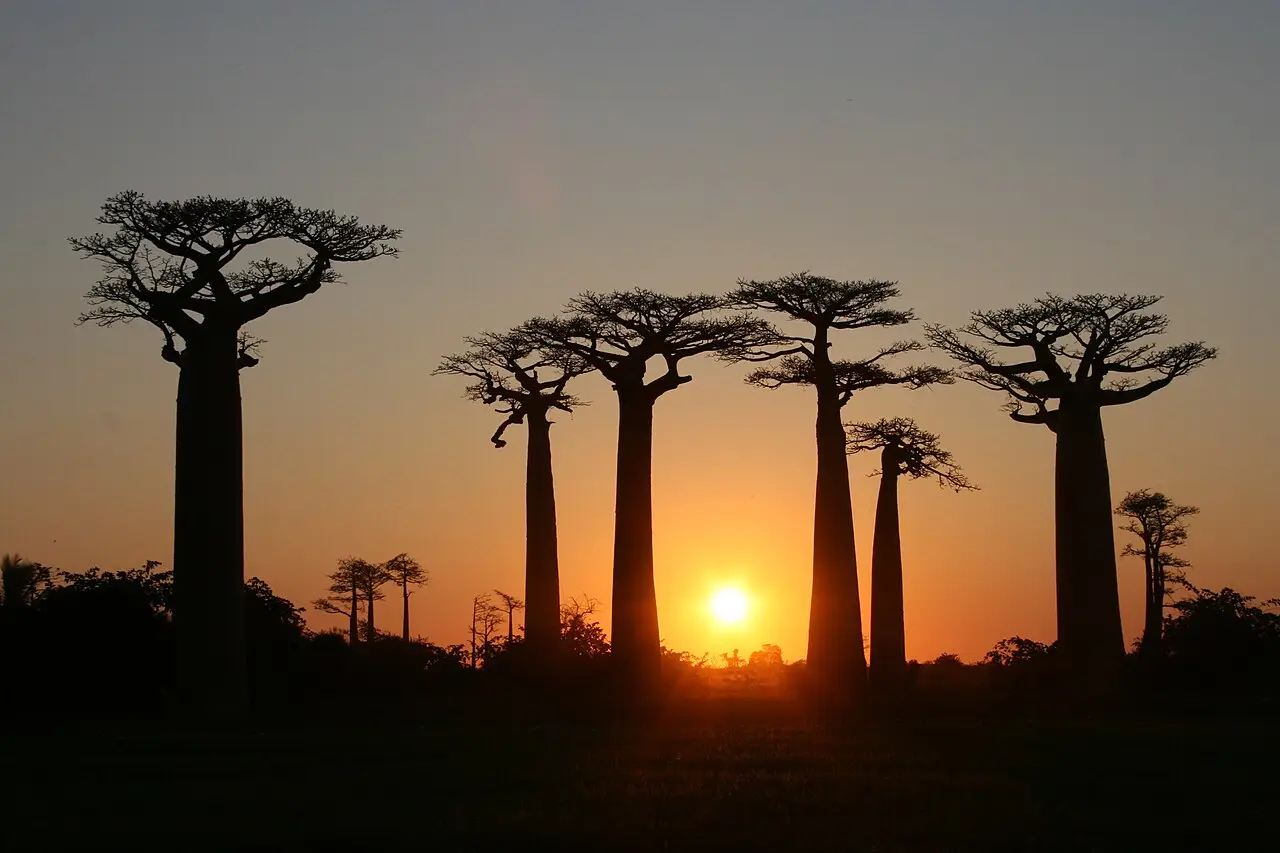
Photo: Gavinevans · CC BY-SA 3.0, Wikimedia Commons

Avenue of the Baobabs
Photo: Gavinevans · CC BY-SA 3.0, Wikimedia Commons

Menabe, Madagascar · World’s best

Avenue of the Baobabs

Access 3/5 · needs planningJFMAMJJASOND

The Avenue of the Baobabs near the town of Morondava is a line of some twenty Grandidier’s baobabs, up to 30 metres tall, along a red road. At sunset and sunrise the trees turn into silhouettes against a pink sky.

Nearby are the “Baobabs in Love”, their trunks intertwined, and forests where lemurs live.

Getting there
Fly from Antananarivo to Morondava or drive 12–14 hours; from town it is 20 minutes.
Fees and tickets
Parking at the avenue costs 5,000 ariary.
Why it’s hard
Getting to Morondava means a long drive or infrequent domestic flights. In the rainy season, from December to March, the roads wash out.
Sources (1)
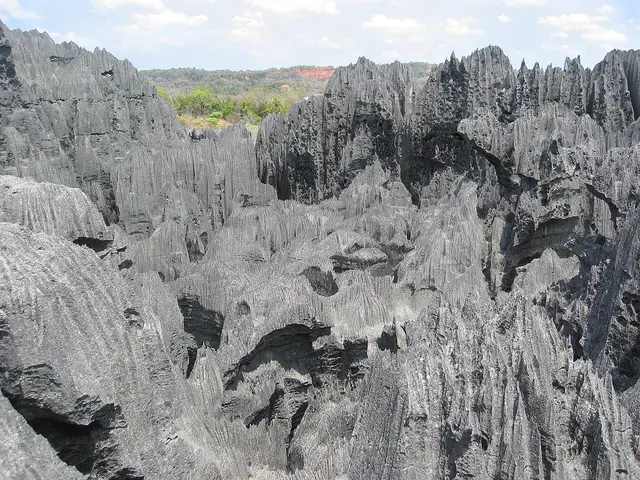
Tsingy de Bemaraha
Photo: ASMaloney at English Wikipedia · Public domain, Wikimedia Commons

Melaky, Madagascar

Tsingy de Bemaraha

Access 4/5 · hardJFMAMJJASOND

The tsingy are knife-sharp limestone pinnacles as tall as a multi-storey building. Across the Grand Tsingy run suspension bridges, ladders and trails with safety lines.

The reserve is a UNESCO World Heritage Site, home to lemurs and other animals found nowhere else.

Getting there
From Morondava, 8–10 hours by 4x4 over rough tracks, with two ferry crossings, to Bekopaka.
Why it’s hard
The road is a rough off-road track with ferries, and it washes out in the rainy season. On the Tsingy routes you need a harness, gloves and a guide.
Sources (2)
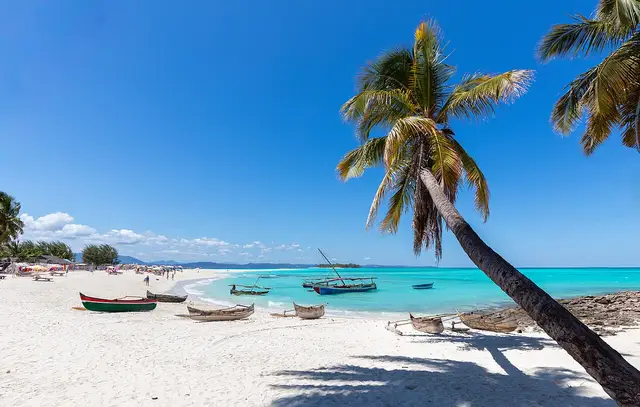
Nosy Be
Photo: Diego Delso · CC BY-SA 4.0, Wikimedia Commons

Diana, Madagascar

Nosy Be

Access 2/5 · fairly easyJFMAMJJASOND

Nosy Be is the main seaside resort of Madagascar: warm sea, ylang-ylang and vanilla plantations, and the Lokobe reserve with its lemurs.

From the island you can visit neighbouring Nosy Iranja with its sandbar and Nosy Komba with its lemurs, and in season go out to see whale sharks.

Getting there
Fly from Antananarivo (or direct from some countries) to Fascene.
Sources (1)

Before you go

Madagascar: entry, safety, money, flights, laws and budget — with sources.

Entry

Russian citizens need a visa: on arrival at international airports (the fee is cash only) or an e-visa in advance at evisamada.gov.mg. Your passport must be valid for at least 6 months after the visa ends, and the return ticket is checked at the border.

Rules for any passport

Checked 2 November 2026. These are the rules for a Russian citizen with an international passport on a tourist trip. For other passports and purposes, see the official website — the button above.

Sources (3)

Safety

The Russian Foreign Ministry’s Consular Department advises refraining from travel to Madagascar: the crime situation is “very difficult”, and robberies and kidnappings have increased, especially in Antananarivo and on the highways. Outside the capital, travel only by day and with a registered guide.

Sources (3)

Money and cards

The Mir card does not work. Bring euros or dollars in cash; taking out more than $1,000 in foreign currency must be declared.

Sources (2)

Flights

There are no direct flights. Connections are via Istanbul, Addis Ababa and Dubai.

Sources (1)

Laws and bans

  • Taking out protected plants and animals is prohibited; gemstones only with a ministry certificate.
  • You can take out up to 2 kg of vanilla duty-free.
  • Every area has its own taboos (“fady”) — ask your guide.
Sources (1)

Budget

prices 1.3 times lower than in Russia · price level 0.29 (US = 1), 2025

Prices are a fifth lower than in Russia, but journeys are long and domestic flights expensive. A visa on arrival costs about $59 for 61–90 days (unofficial data).

The price level is the ratio of purchasing power parity for household consumption to the market exchange rate (World Bank). These are national averages: resorts and capitals cost more, the countryside less. Flights are not included.

Sources (3)