Gorkhi-Terelj

Countries in the atlas · East Asia

Mongolia

Steppe, yurts and sky: the granite rocks of Terelj, clear Khövsgöl and the singing dunes of the Gobi.

Russian passport: visa-free · 30 daysprices about the same as in Russia

Photo: Dan Nevill from Seattle, WA, United States · CC BY 2.0, Wikimedia Commons

Gorkhi-Terelj
Photo: Dan Nevill from Seattle, WA, United States · CC BY 2.0, Wikimedia Commons

Töv, Mongolia

Gorkhi-Terelj

Access 1/5 · easyJFMAMJJASOND

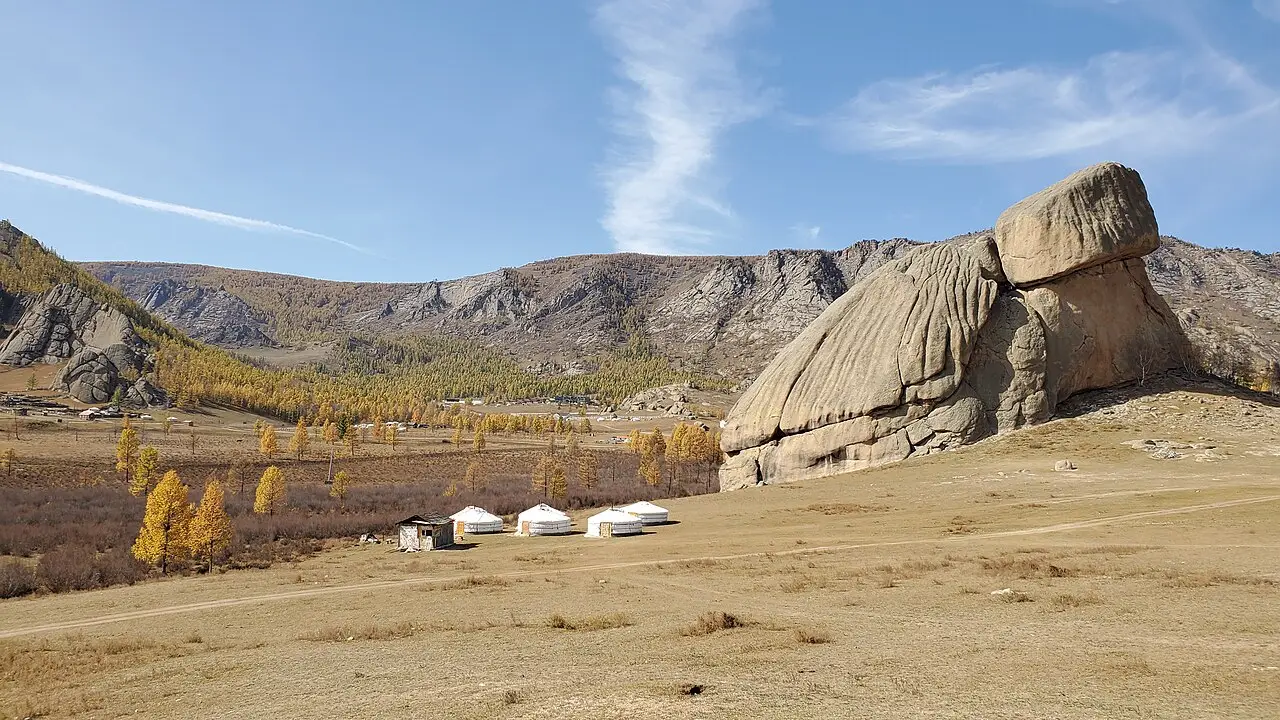
Gorkhi-Terelj National Park is a place of granite rocks in fanciful shapes (such as Turtle Rock), river valleys and larch-covered slopes.

Here you sleep in yurts, ride horses and climb to the Aryapala Buddhist temple. Nearby is the giant equestrian statue of Genghis Khan at Tsonjin Boldog.

Getting there
From Ulaanbaatar, about 1.5 hours by car.
Fees and tickets
Entry to the national parks of Mongolia is paid — the amount could not be confirmed on an official website.
Sources (2)
Lake Khövsgöl
Photo: Bernard Gagnon · CC0, Wikimedia Commons

Khövsgöl, Mongolia

Lake Khövsgöl

Access 3/5 · needs planningJFMAMJJASOND

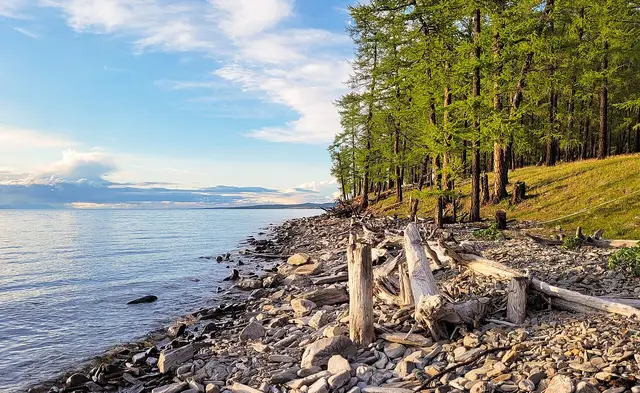
Khövsgöl is the largest freshwater lake in Mongolia by volume, with clear water and taiga on its shores. The Tsaatan reindeer herders live here.

In summer people go out by boat and on horseback; in winter the lake freezes so hard that cars drive on it, and an ice festival is held in February.

Getting there
From Ulaanbaatar, fly to Mörön and drive 2 hours, or travel 12–14 hours by road.
Fees and tickets
Entry to the national park is paid; fishing only in designated places.
Why it’s hard
Far from the capital, with dirt roads in places and few services. The summer season is short, and winter frosts drop below −30 °C.
Sources (2)
Gobi Desert
Photo: Bernard Gagnon · CC0, Wikimedia Commons

Ömnögovi, Mongolia

Gobi Desert

Access 3/5 · needs planningJFMAMJJASOND

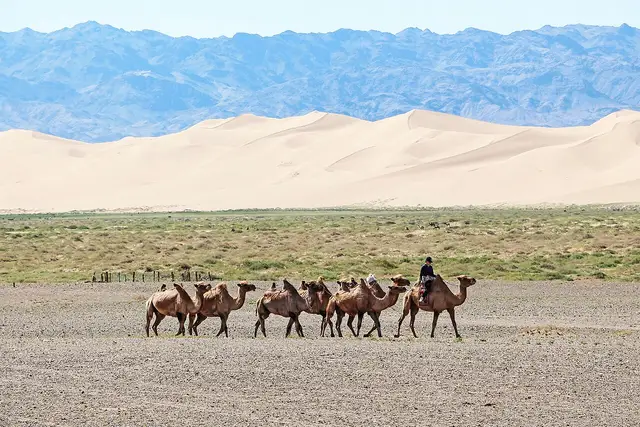
Khongoryn Els are dunes up to 300 metres high that hum when sand slides down them. The Flaming Cliffs of Bayanzag are where the first dinosaur eggs were found.

In the Yolyn Am gorge the ice lasts until early summer. You stay in yurt camps, and the sky over the Gobi is one of the darkest on Earth.

Getting there
From Ulaanbaatar, fly to Dalanzadgad or spend 2–3 days in a 4x4; most people go on a 5–7-day tour.
Fees and tickets
Entry to the nature reserves is paid. The 30-kilometre zone along the border with China is open only with a permit; taking fossils out of the country is prohibited.
Why it’s hard
Huge distances off-road, heat by day and cold at night, little phone signal and few services. You need an experienced driver and a supply of water.
Sources (3)

Before you go

Mongolia: entry, safety, money, flights, laws and budget — with sources.

Entry

Russian citizens: visa-free for up to 30 days in a row, but no more than 90 days within 180 (2014 agreement). Stays of up to 30 days need no registration; for longer stays, register within 7 days.

Rules for any passport

Checked 2 November 2026. These are the rules for a Russian citizen with an international passport on a tourist trip. For other passports and purposes, see the official website — the button above.

Sources (3)

Safety

No Russian Foreign Ministry advice to refrain from travel (as of 02.11.2026). The Ministry advises insurance, especially for active holidays.

Sources (2)

Money and cards

The Mir card does not work. Bring cash; in the provinces you need tugriks, and state institutions accept only them.

Sources (2)

Flights

There are no direct flights from Moscow; IrAero flies from Irkutsk and KrasAvia from Krasnoyarsk to Ulaanbaatar.

Sources (3)

Laws and bans

  • Taking out fossils, dinosaur bones and archaeological finds is prohibited; antiques only with a permit.
  • You may not take out deer antlers, shilajit, raw hides, wool or rare plants.
  • The 30-kilometre border zone with China is open only with a special permit.
  • Filming military sites is prohibited, and carrying knives in towns is not allowed.
Sources (1)

Budget

prices about the same as in Russia · price level 0.33 (US = 1), 2025

Prices are a tenth lower than in Russia. Entry to nature reserves and national parks is paid; the main cost is a car with a driver for long routes.

The price level is the ratio of purchasing power parity for household consumption to the market exchange rate (World Bank). These are national averages: resorts and capitals cost more, the countryside less. Flights are not included.

Sources (2)