Krasnaya Polyana

Countries in the atlas · Russia

Russia

The largest country in the world: from the Caucasus and Baikal to the volcanoes of Kamchatka and the Arctic archipelagos. No visa or international passport is needed, but some places are open only with passes and permits.

Russian passport: home country

Photo: Alexxx Malev · CC BY-SA 3.0, Wikimedia Commons

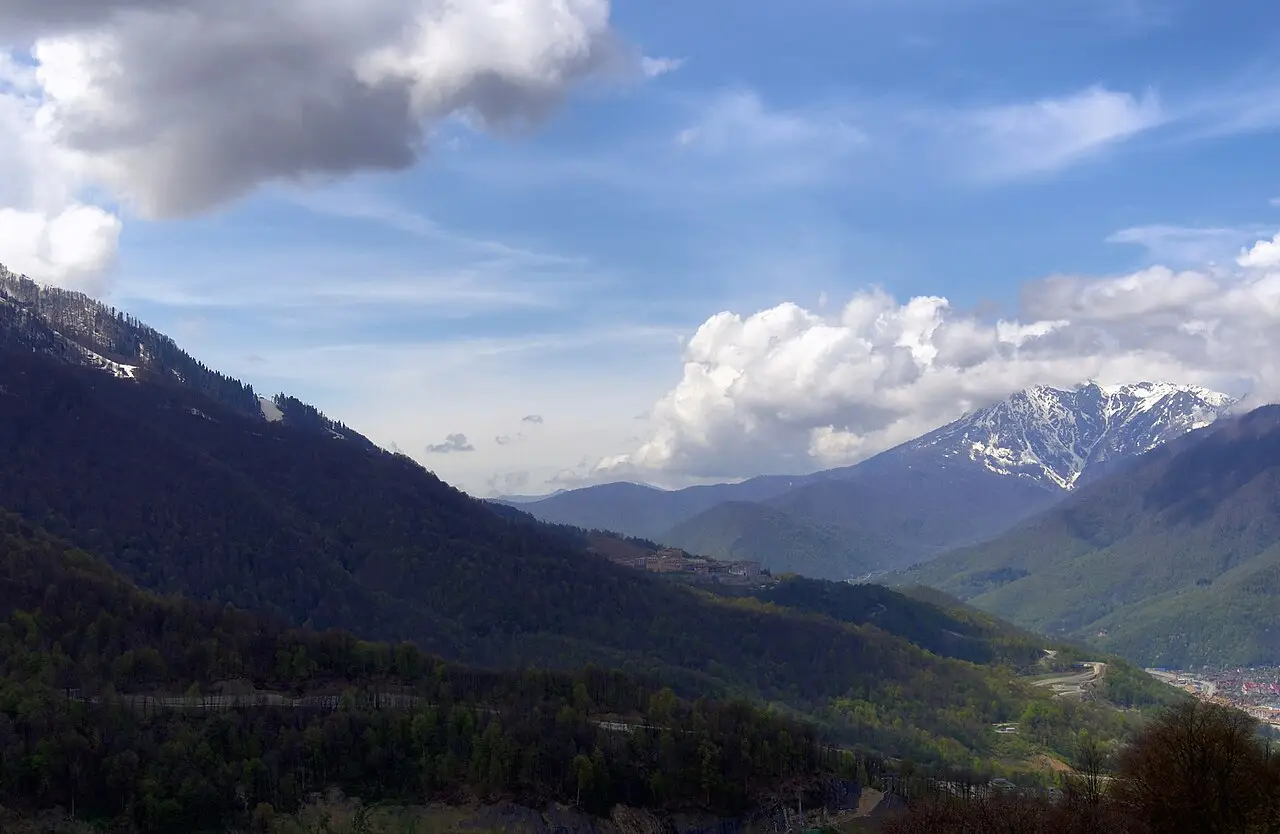
Krasnaya Polyana
Photo: Alexxx Malev · CC BY-SA 3.0, Wikimedia Commons

Sochi, Krasnodar Krai, Russia · Absolute community home

Krasnaya Polyana

Access 1/5 · easyJFMAMJJASOND

The village in the Mzymta valley is ringed by the Aibga ridge and the peaks of the Main Caucasian Range. Since the 2014 Olympics three resorts have been running here — Rosa Khutor, Krasnaya Polyana and Gazprom — and their lifts go up to almost 2,300 metres.

In summer the lifts carry you up to alpine meadows and viewpoints, and trails lead from the village to the lakes and waterfalls of Sochi National Park. This is also a centre of the Absolute community: a convenient starting point for hikes across the Caucasus.

Getting there
Fly to Sochi (Adler), then 40–60 minutes by Lastochka train, bus or taxi to Esto-Sadok and Krasnaya Polyana.
Fees and tickets
Since 01.05.2026 the resorts have charged 250 roubles for visiting Sochi National Park — it is not included in the ski pass; elsewhere in the park it is 300 roubles, and at the popular waterfalls 400 roubles per site.
Lake Baikal and Olkhon
Photo: Vyacheslav Argenberg · CC BY 4.0, Wikimedia Commons

Irkutsk Oblast, Russia · World’s best

Lake Baikal and Olkhon

Access 2/5 · fairly easyJFMAMJJASOND

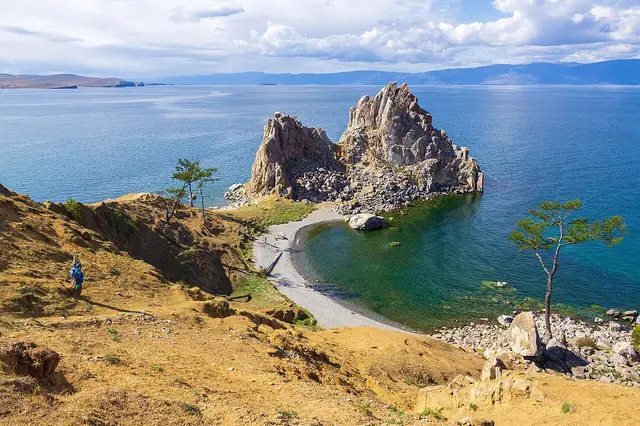
Baikal is the oldest and deepest lake on the planet and a UNESCO World Heritage Site. Olkhon is its largest island: steppe, larch forests and Cape Burkhan with Shamanka Rock, a sacred place of the Buryats.

In winter the lake freezes, and people walk across the ice to ice grottoes, pressure ridges and gas bubbles frozen deep inside it. The ice holds roughly from January to May; go out on it only by official crossings and proven routes.

Getting there
Fly or take the train to Irkutsk, then 5–6 hours by car or bus to the Olkhon ferry; in winter you cross on the ice road.
Fees and tickets
Pribaikalsky National Park permit for Russian citizens: Olkhon 300 roubles, the “North of Olkhon Island” route 500 roubles; issued online at baikalpass.ru.
Sources (5)
Altai Mountains
Photo: Ondřej Žváček · CC BY 2.5, Wikimedia Commons

Altai Republic, Russia

Altai Mountains

Access 2/5 · fairly easyJFMAMJJASOND

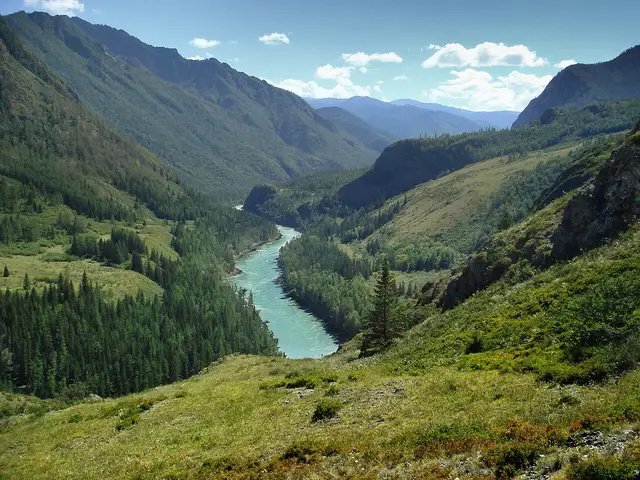
The Chuysky Trakt follows the Katun over the Seminsky and Chike-Taman passes to the Kurai steppe and Kosh-Agach. Along the way are the confluence of the Chuya and the Katun, Geyser Lake and the many-coloured slopes of Kyzyl-Chin.

The Golden Mountains of Altai are a UNESCO World Heritage Site: the Altai and Katun nature reserves, the Ukok Plateau and Belukha, the highest point in Siberia.

Getting there
Fly to Gorno-Altaysk or Barnaul, then go by car or bus along the Chuysky Trakt. The Kosh-Agach district is in the border zone: the five-kilometre strip along the border is open only with an FSB pass.
Sources (4)
Karelia: Ruskeala and Kizhi
Photo: Anders98en · CC BY-SA 4.0, Wikimedia Commons

Republic of Karelia, Russia

Karelia: Ruskeala and Kizhi

Access 1/5 · easyJFMAMJJASOND

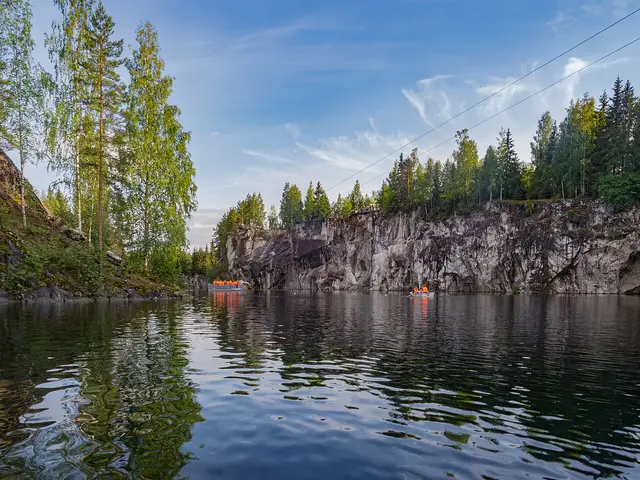
Ruskeala Mountain Park is a flooded marble quarry: white walls, clear water, boats and old mine tunnels. In winter the ice and the underground halls are lit up.

Kizhi is an island in Lake Onega with the Kizhi Pogost ensemble: the 18th-century wooden Church of the Transfiguration with 22 domes and a tented bell tower. A UNESCO World Heritage Site.

Getting there
From St Petersburg to Ruskeala, take the Ruskeala Express vintage train or drive for 4–5 hours. To Kizhi, take a Meteor hydrofoil from Petrozavodsk in summer.
Fees and tickets
Ruskeala: entry 750 roubles, tours 950–2,500 roubles. Kizhi: according to the museum’s price list for the season.
Sources (6)
Teriberka
Photo: Dmitry A. Mottl · CC BY-SA 4.0, Wikimedia Commons

Murmansk Oblast, Russia

Teriberka

Access 2/5 · fairly easyJFMAMJJASOND

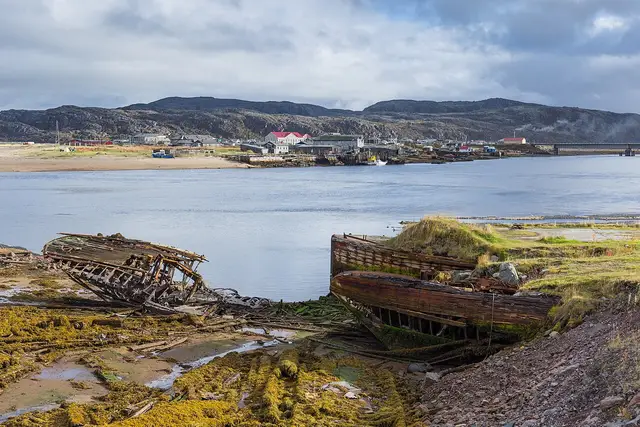
An old Pomor village at the edge of the mainland: a harsh sea, rounded hills, a waterfall on a stream, a ship graveyard and a beach of smooth boulders nicknamed “dragon eggs”.

In midwinter the sun does not rise above the horizon here — the time of the polar night and the northern lights. Summer is the opposite: the polar day, when the sun does not set for weeks.

Getting there
From Murmansk, 2–2.5 hours by car on a road across the tundra, and a bus runs 4 days a week; the road closes in snowstorms, so check the forecast.
Sources (1)
Sulak Canyon and Highland Dagestan
Photo: Sobolev Alexander · CC BY-SA 4.0, Wikimedia Commons

Republic of Dagestan, Russia

Sulak Canyon and Highland Dagestan

Access 2/5 · fairly easyJFMAMJJASOND

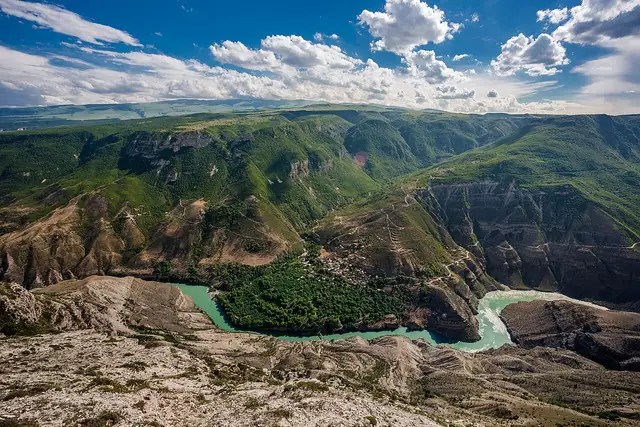
Sulak Canyon, about 1,900 metres deep, is one of the deepest in the world. Below lies the turquoise water of the Sulak and the Chirkey Reservoir, with boats running across it.

Higher in the mountains are villages on the slopes, old fortresses and the abandoned village of Gamsutl on top of a rock. In the villages it is customary to dress modestly: shoulders and knees covered.

Getting there
Fly to Makhachkala, then about 1.5–2 hours by car to the viewpoints near the village of Dubki. These are mountain roads, so it is easier with a local guide.
Sources (2)
Kamchatka: Volcanoes and the Valley of Geysers
Photo: Kandukuru Nagarjun from Bangalore, India · CC BY 2.0, Wikimedia Commons

Kamchatka Krai, Russia · World’s best

Kamchatka: Volcanoes and the Valley of Geysers

Access 4/5 · hardJFMAMJJASOND

The Volcanoes of Kamchatka are a UNESCO World Heritage Site. From Petropavlovsk-Kamchatsky you can see three volcanoes at once, and Avachinsky can be climbed in one long day without mountaineering gear.

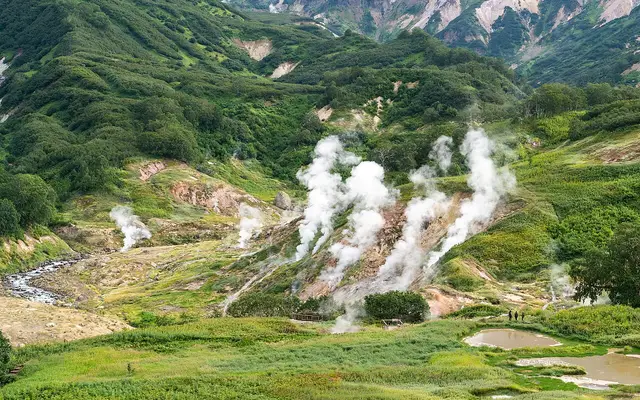
The Valley of Geysers in the Kronotsky Nature Reserve is one of the largest geyser fields in the world. You can only get there on an organised trip: by helicopter and under the rules of the reserve.

Getting there
A direct flight from Moscow to Petropavlovsk-Kamchatsky takes about 9 hours. From there, off-road vehicles go to the volcanoes and helicopters to the reserve.
Fees and tickets
The Kronotsky reserve’s one-day tour to the Valley of Geysers costs 10,000 roubles, and the “Valley of Geysers” programme from 20,680 roubles a day; the helicopter is paid separately. The reserve’s season runs from 1 June to 30 September.
Why it’s hard
Far and expensive: a flight across the whole country, a helicopter to the Valley of Geysers, and the weather sets the schedule. The season for volcanoes and geysers is July to September.
Putorana Plateau
Photo: Vitaly Repin · CC BY-SA 3.0, Wikimedia Commons

Taymyr, Krasnoyarsk Krai, Russia

Putorana Plateau

Access 5/5 · expeditionJFMAMJJASOND

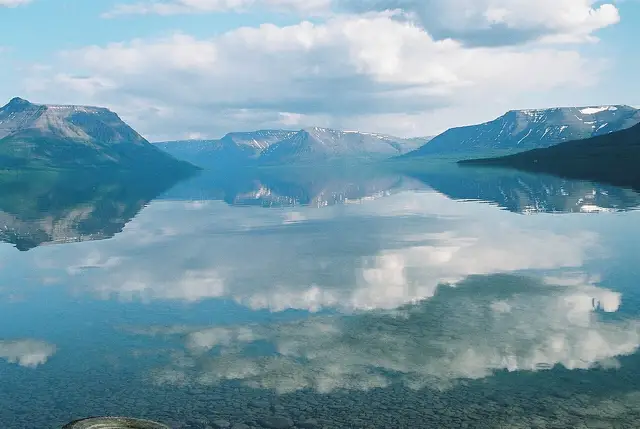
A vast basalt plateau east of Norilsk: table mountains with sheer ledges, canyons, thousands of lakes and countless waterfalls. The Putorana Nature Reserve is a UNESCO World Heritage Site.

There are no roads here, only water and air. The short summer — July and August — is the time for river trips, hikes and boat journeys on Lake Lama and Lake Sobachye.

Getting there
Fly to Norilsk, then by boat across Lake Lama or by helicopter to the bases and ranger stations of the reserve.
Why it’s hard
The only transport is boats and helicopters, and the season lasts about two months a year. Entry to the reserve is by permit only, and foreigners need a pass to visit Norilsk.
Sources (2)
Franz Josef Land
Photo: Николай Гернет · CC BY-SA 4.0, Wikimedia Commons

Arkhangelsk Oblast, Russia, Arctic Ocean

Franz Josef Land

Access 5/5 · expeditionJFMAMJJASOND

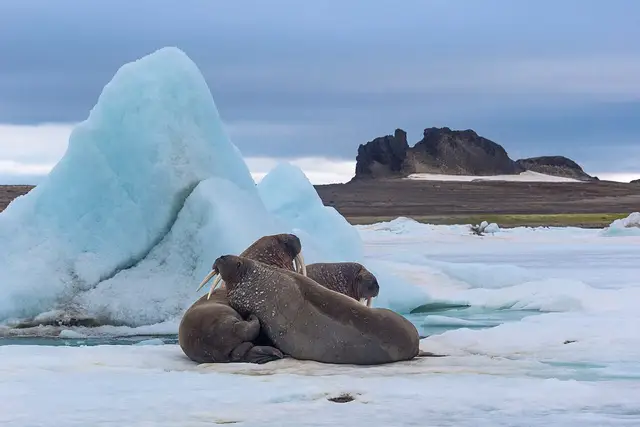
Nearly two hundred glacier-covered islands not far from the North Pole. Thousands of seabirds nest on Rubini Rock, walruses rest on the shores and polar bears roam; Cape Flora and Tikhaya Bay keep traces of polar expeditions.

The archipelago is part of the Russian Arctic National Park. Visitors come on expedition cruises — including aboard a nuclear icebreaker on its way to the North Pole.

Getting there
Expedition cruises from Murmansk or Arkhangelsk — usually 10–14 days, in July and August.
Fees and tickets
The Russian Arctic National Park fee is 160 roubles; the pass is arranged at least 30 days before departure, and every cruise is accompanied by a state inspector.
Why it’s hard
You need a national park permit and a border zone pass, which the cruise operator arranges. Berths are few, and cruises are expensive and sell out well in advance.
Sources (4)

Before you go

Russia: entry, safety, money, flights, laws and budget — with sources.

Entry and permits

Russian citizens need no visa, but the border zone and nature reserves have their own rules. The five-kilometre strip along the border is open only with a pass from the FSB border directorate, which takes up to 15 working days to issue. Nature reserves and closed areas of national parks are open only with a permit from their administration; national parks usually require a paid pass bought online.

Foreigners from 64 countries, including Vietnam and China, can get the unified e-visa at electronic-visa.kdmid.ru: processing takes up to 4 days, it is valid for 120 days, and the stay is up to 30 days. Vietnamese citizens need no visa for trips of up to 30 days from 15.10.2026 to 15.10.2027. A foreigner needs a pass for the border zone, which takes up to 30 working days.

Rules for any passport

Checked 2 November 2026. These are the rules for a Russian citizen with an international passport on a tourist trip. For other passports and purposes, see the official website — the button above.

Sources (6)

Safety

The main risks in the wild are the weather, forest fires and wild animals. In the fire season, regions bring in a special fire safety regime and may close the forests. In the mountains and on the water, tourist groups register with the regional Emergencies Ministry (EMERCOM).

Laws and bans

  • Border zone: the five-kilometre strip along the border is open only with a pass, and entering the hundred-metre strip is forbidden. Foreigners need a pass for any part of the border zone.
  • Nature reserves and national parks: you may be there only with a permit, put up tents and light fires only in designated places, and fly drones only with the administration’s permission. The fine for breaking the rules is 3–4 thousand roubles; damage to nature can lead to criminal charges.
  • Forest fires: the fine for individuals is 15–30 thousand roubles, 40–50 thousand under a special fire safety regime, and 50–60 thousand if the violation started a fire.
  • Drones from 150 grams to 30 kg must be registered; since 01.03.2026, flights outside controlled airspace require remote identification (except for drones lighter than 250 grams).
  • Professional filming in nature reserves is a paid service: in the Kronotsky reserve, from 45,330 roubles a day per group.
Sources (8)

Budget

Russia’s price level · price level 0.37 (US = 1), 2025

The tourist tax is set by municipalities: in 2026, up to 2% of the cost of accommodation, but no less than 100 roubles a night; Moscow has none. The main costs in the wild are getting there: flights across the country, helicopters, 4x4s and boats.

The price level is the ratio of purchasing power parity for household consumption to the market exchange rate (World Bank). These are national averages: resorts and capitals cost more, the countryside less. Flights are not included.

Sources (2)