Iguazu Falls

Countries in the atlas · Latin America

Argentina

Iguazu Falls, the living Perito Moreno Glacier and the southernmost city in the world — the gateway to Antarctica.

Russian passport: visa-free · 90 days

Photo: Acediscovery · CC BY 4.0, Wikimedia Commons

Iguazu Falls
Photo: Acediscovery · CC BY 4.0, Wikimedia Commons

Misiones, Argentina · World’s best

Iguazu Falls

Access 2/5 · fairly easyJFMAMJJASOND

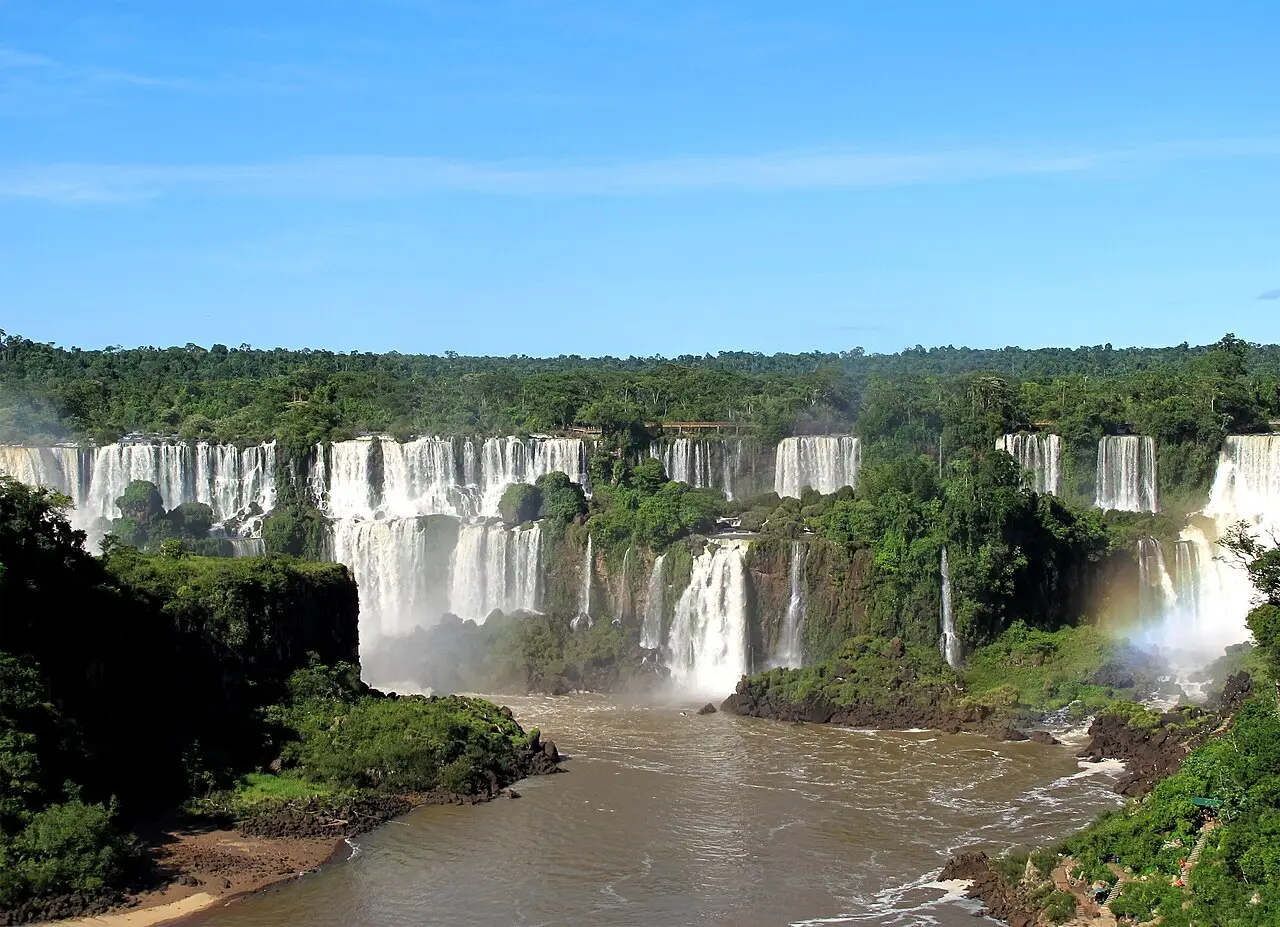
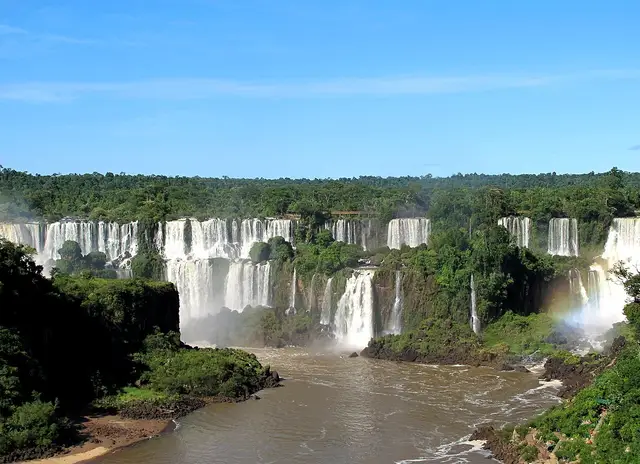
Iguazu Falls, on the border of Argentina and Brazil, are 275 cascades stretching almost three kilometres. The most powerful is the Devil’s Throat, reached by walkways right above the torrent.

The national parks of both countries are UNESCO World Heritage Sites. On the Argentine side you walk among the falls; on the Brazilian side you see the panorama.

Getting there
Fly from Buenos Aires to Puerto Iguazú (about 2 hours), then 20 minutes to the park.
Fees and tickets
Since 01.06.2026 entry for foreigners has cost 60,000 Argentine pesos a day; the second day is 50% off.
Sources (3)
Perito Moreno Glacier
Photo: Diego Delso · CC BY-SA 3.0, Wikimedia Commons

Santa Cruz, Argentina

Perito Moreno Glacier

Access 3/5 · needs planningJFMAMJJASOND

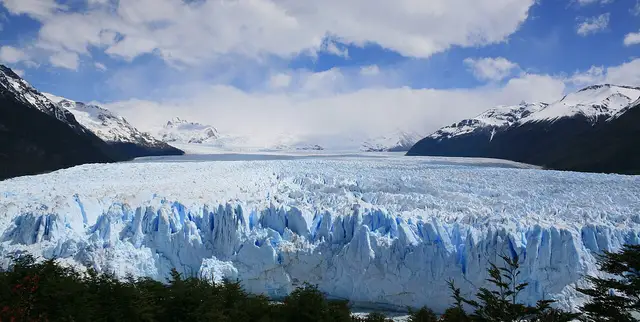
Perito Moreno is a glacier 30 kilometres long. Its face, 5 km wide and on average 74 metres high above the water, breaks off into Lake Argentino with a roar and a burst of spray.

From the walkways opposite the glacier you can hear the ice crack; on the glacier itself you walk with guides, in crampons. Los Glaciares National Park is a UNESCO site.

Getting there
Fly to El Calafate (about 3 hours from Buenos Aires), then 1.5 hours by car.
Fees and tickets
Los Glaciares National Park costs foreigners 50,000 Argentine pesos a day.
Why it’s hard
Far down in southern Patagonia, with expensive flights and changeable weather. Walks on the glacier are only with licensed guides.
Ushuaia and Tierra del Fuego
Photo: Liam Quinn from Canada · CC BY-SA 2.0, Wikimedia Commons

Tierra del Fuego, Argentina

Ushuaia and Tierra del Fuego

Access 3/5 · needs planningJFMAMJJASOND

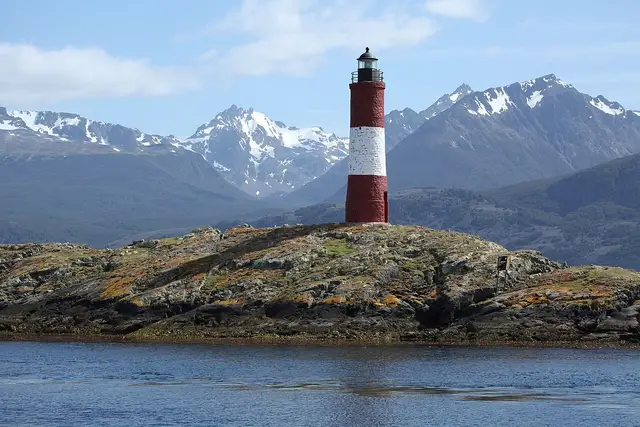
Ushuaia sits on the Beagle Channel beneath snowy mountains. Boats run to the Les Eclaireurs lighthouse and to sea lion and penguin colonies.

Tierra del Fuego National Park has forests, lakes and the end of the Pan-American Highway. Most cruises to Antarctica leave from here.

Getting there
Fly from Buenos Aires, about 3.5 hours.
Fees and tickets
Tierra del Fuego National Park costs foreigners 40,000 Argentine pesos a day.
Why it’s hard
The end of the continent: a long flight, cold and windy weather even in summer, and a short best season, from November to March.

Before you go

Argentina: entry, safety, money, flights, laws and budget — with sources.

Entry

Russian citizens: visa-free for up to 90 days within 180 (2009 agreement). For a tourist’s entry, the official page of the immigration service lists only a valid passport. A Russian driving licence is valid for only 2 months.

Rules for any passport

Checked 2 November 2026. These are the rules for a Russian citizen with an international passport on a tourist trip. For other passports and purposes, see the official website — the button above.

Sources (4)

Safety

No Russian Foreign Ministry advice to refrain from travel (as of 02.11.2026). The Ministry warns about pickpocketing and thefts from cars.

Sources (2)

Money and cards

The Mir card does not work. Bring dollars in cash; you may take out no more than $10,000 in cash per adult.

Sources (2)

Flights

There are no direct flights. Connections are via Istanbul, Dubai, Doha and other hubs.

Sources (1)

Laws and bans

  • Cash exports are limited to $10,000 per adult.
  • Historical and archaeological objects may be taken out only with a permit.
  • Bringing in fresh, non-preserved food is prohibited.
Sources (1)

Budget

no World Bank data

There are no World Bank data for Argentina. Since 01.06.2026 the national parks have charged foreigners: Iguazu 60,000 pesos, Los Glaciares 50,000, Tierra del Fuego 40,000 a day; the second day is 50% off.

The price level is the ratio of purchasing power parity for household consumption to the market exchange rate (World Bank). These are national averages: resorts and capitals cost more, the countryside less. Flights are not included.

Sources (1)