Chefchaouen

Countries in the atlas · Middle East and North Africa

Morocco

Blue Chefchaouen, the dunes of the Sahara and the High Atlas — Africa a few hours’ flight from Europe.

Russian passport: visa-free · 90 daysprices ×1.1 vs Russia

Photo: Buiobuione · CC BY-SA 4.0, Wikimedia Commons

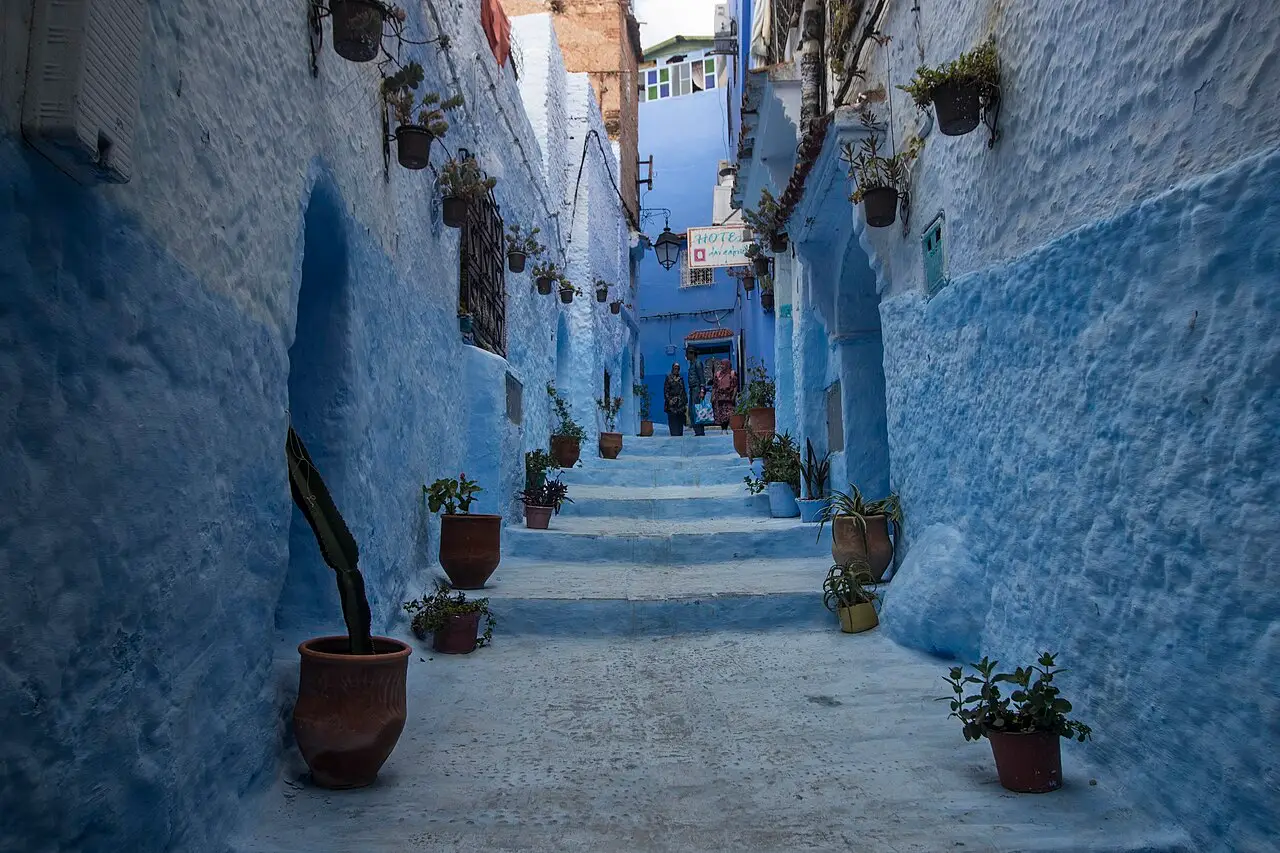
Chefchaouen
Photo: Buiobuione · CC BY-SA 4.0, Wikimedia Commons

Rif, Morocco

Chefchaouen

Access 1/5 · easyJFMAMJJASOND

The medina of Chefchaouen is painted in every shade of blue: walls, doors, steps. The town sits on a slope of the Rif Mountains; above it, trails lead to the Akchour waterfalls and to the Spanish Mosque with its sunset view.

It is calmer here than in the big cities of Morocco: you can simply wander the lanes and watch the town change colour through the day.

Getting there
From Tangier or Fez, 2.5–4 hours by bus or taxi.
Sources (2)
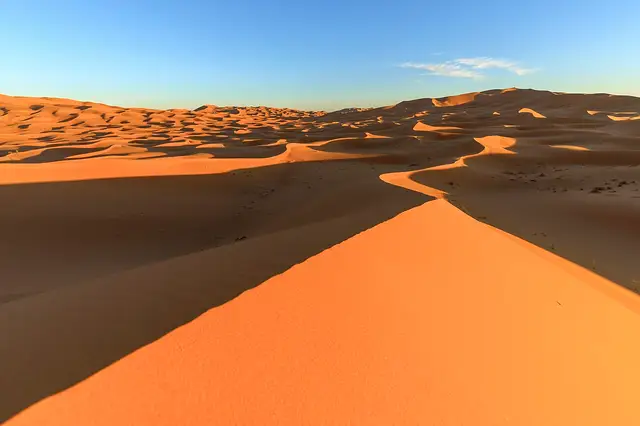
Merzouga and Erg Chebbi
Photo: Thomas Fuhrmann · CC BY-SA 4.0, Wikimedia Commons

Sahara, Morocco

Merzouga and Erg Chebbi

Access 3/5 · needs planningJFMAMJJASOND

Erg Chebbi is a sea of tall dunes by the village of Merzouga. People come here to ride camels into the sands at sunset and to meet the sunrise on the crest of a dune.

Nights are spent in tented camps among the dunes: dinner, drums, silence and a sky without lights.

Getting there
From Marrakech, 9–10 hours by car across the Atlas (usually a three-day tour), or a bus from Fez.
Why it’s hard
A very long drive over the passes of the Atlas, heat by day and cold at night. Most people go on a two- or three-day tour; on summer days the sands are dangerously hot.
Sources (2)
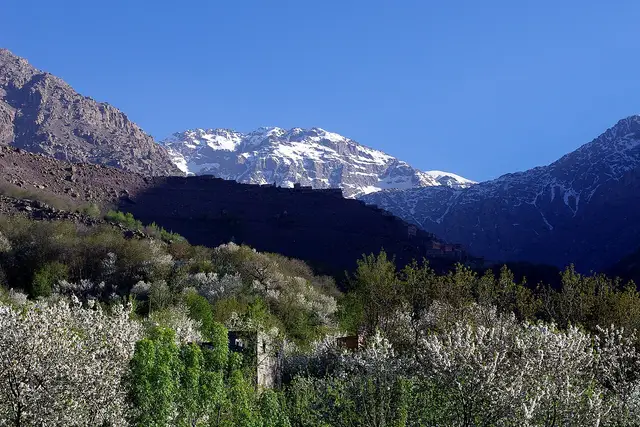
Toubkal
Photo: Toni Wöhrl · CC BY-SA 4.0, Wikimedia Commons

High Atlas, Morocco

Toubkal

Access 3/5 · needs planningJFMAMJJASOND

The climb up Toubkal (4,167 metres) starts in the village of Imlil: on the first day you walk up to the refuges, on the second you set off early for the summit and come back down. In summer the route is technically easy, but you will feel the altitude.

Toubkal National Park is a land of Berber villages, walnut groves and terraces. Even without the summit, the trails around Imlil are worth the trip.

Getting there
From Marrakech, about 1.5 hours by car to Imlil.
Fees and tickets
Guides and porters are hired in Imlil.
Why it’s hard
An altitude of more than 4,000 metres: you need to acclimatise. In winter the route calls for crampons and an ice axe.
Sources (1)

Before you go

Morocco: entry, safety, money, flights, laws and budget — with sources.

Entry

Russian citizens: visa-free for up to 90 days, unilaterally (the Foreign Ministry’s Consular Department). You can extend for another 90 days with the police. Requirements for any passport can be checked on the acces-maroc.ma portal.

Rules for any passport

Checked 2 November 2026. These are the rules for a Russian citizen with an international passport on a tourist trip. For other passports and purposes, see the official website — the button above.

Sources (3)

Safety

No Russian Foreign Ministry advice to refrain from travel (as of 02.11.2026).

Sources (2)

Money and cards

The Mir card does not work. Bring euros or dollars in cash and change them into dirhams at banks and exchange offices.

Sources (2)

Flights

Seasonal direct Royal Air Maroc flights: Sheremetyevo — Casablanca, daily from 25.10.2026 to 27.03.2027. At other times, via Istanbul.

Sources (1)

Laws and bans

  • Drugs, including cannabis: zero tolerance — long sentences and heavy fines.
  • A drone may be brought in and flown only with permission from the Directorate General of Civil Aviation.
  • Alcohol only in licensed bars and restaurants; no drinking in the street.
  • Do not film military or politically sensitive sites; photograph people, especially children, only with their permission.
  • During Ramadan, do not eat, drink or smoke in the street in the daytime.
Sources (1)

Budget

prices ×1.1 vs Russia · price level 0.42 (US = 1), 2025

Prices are slightly higher than in Russia. There are no mandatory entry fees; a trip to the Sahara is usually a 2–3-day tour.

The price level is the ratio of purchasing power parity for household consumption to the market exchange rate (World Bank). These are national averages: resorts and capitals cost more, the countryside less. Flights are not included.

Sources (1)