The second country of the Absolute community: from the karst of Ha Long Bay and the rice terraces of Sa Pa to the island of Phu Quoc and the largest cave in the world.
Russian passport: visa-free · 45 daysprices 1.2 times lower than in Russia
Photo: Trantuonglam · CC BY-SA 4.0, Wikimedia Commons
Photo: Trantuonglam · CC BY-SA 4.0, Wikimedia Commons
An Giang, Vietnam · Absolute community home
Phu Quoc
Access 1/5 · easyJFMAMJJASOND
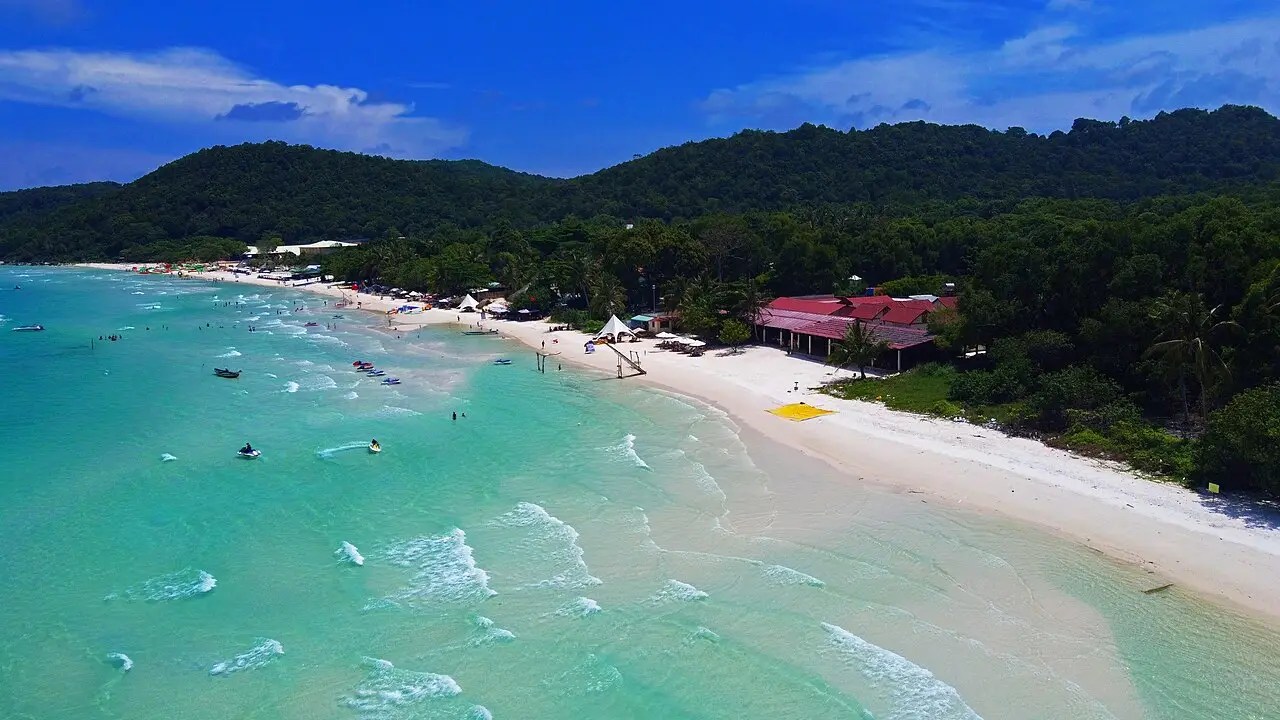
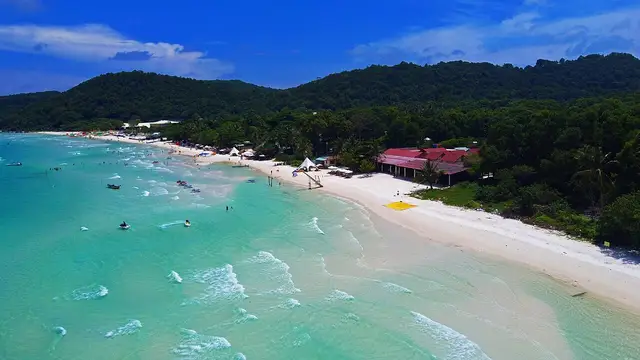
The largest island in Vietnam: the white-sand beaches of Sao and Ong Lang, national park forests in the north, fishing villages and pepper farms. The sunsets here are over the sea, on the west coast.
Phu Quoc is one of the centres of the Absolute community. The dry season runs from November to April, and from here it is easy to travel around southern Vietnam and on to Cambodia.
Getting there
Direct flights from Russia, or via Ho Chi Minh City (about an hour’s flight).
Photo: Thomas Hirsch / Ravn · CC BY-SA 3.0, Wikimedia Commons
Quang Ninh, Vietnam · World’s best
Ha Long Bay
Access 1/5 · easyJFMAMJJASOND
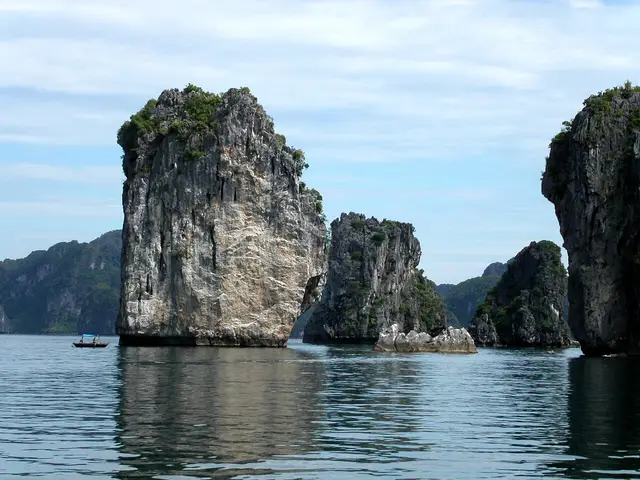
In Ha Long Bay and neighbouring Lan Ha Bay, some two thousand limestone rocks and islands rise out of the water. Junks sail between them, there are caves in the rocks, and kayaks wait by the floating villages.
The bay is a UNESCO World Heritage Site. It is at its most beautiful on an overnight cruise: in the evening and at dawn, when the day boats have gone.
Getting there
From Hanoi, about 2.5 hours on the expressway to Tuan Chau harbour; from there, day or overnight cruises.
Fees and tickets
The bay authority fee is 150,000 to 600,000 dong depending on the route, and a night on the water 500,000–750,000. Boats go out from 5am and return by 20:00.
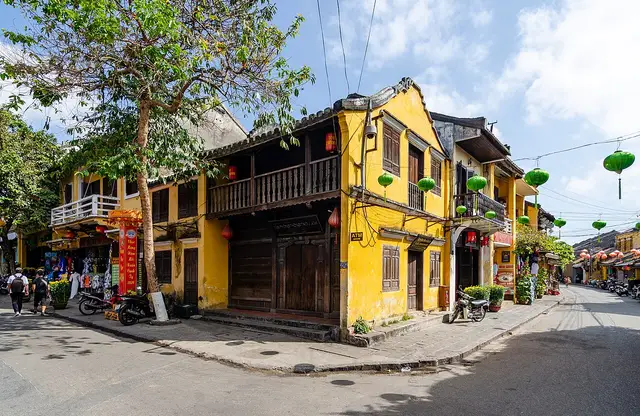
Hoi An was a port from the 15th to the 19th century, where Vietnamese, Chinese and Japanese architecture blended. The Ancient Town is a UNESCO World Heritage Site; in the evening thousands of silk lanterns light up its streets.
Nearby are An Bang Beach, rice fields to cycle through and the ruins of the My Son Sanctuary.
Getting there
Fly to Da Nang, then about 40 minutes by taxi.
Fees and tickets
A ticket to the old town costs 80,000 or 120,000 dong, depending on the number of sites.
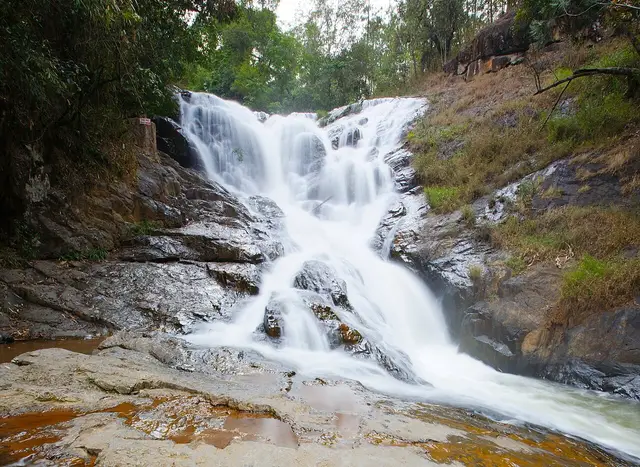
Da Lat sits on a plateau at about 1,500 metres, so it is cool all year round. Pine forests, waterfalls, Xuan Huong Lake and colonial villas — the Vietnamese themselves love this town.
Around it are coffee and strawberry farms, flower greenhouses and Langbiang Mountain, with a view over the whole plateau.
Getting there
Fly to Lien Khuong airport (from Hanoi or Ho Chi Minh City), then 30 minutes to town.
Photo: Christophe95 · CC BY-SA 4.0, Wikimedia Commons
Lao Cai, Vietnam
Sa Pa and Fansipan
Access 2/5 · fairly easyJFMAMJJASOND
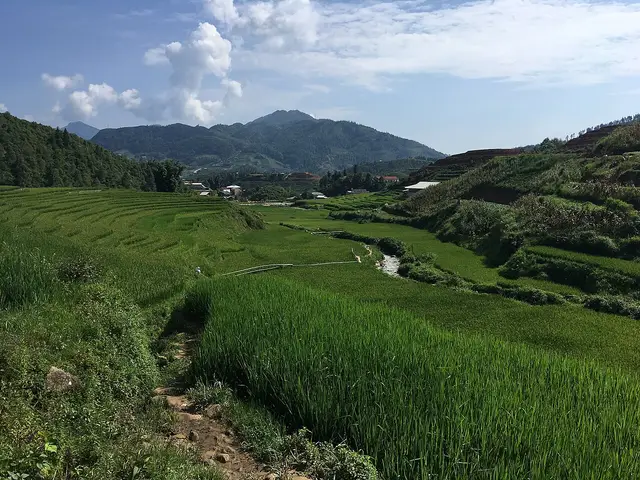
Sa Pa is a mountain town in northern Vietnam. Around it are rice terraces on the slopes and villages of the Hmong and Dao peoples; the best trails run through the Muong Hoa valley.
Fansipan is the highest point in Indochina, at just over 3,100 metres. You can reach the summit on foot in two days or by cable car in half an hour.
Getting there
From Hanoi, about 5–6 hours by bus on the expressway, or a night train to Lao Cai and an hour on to Sa Pa.
Photo: Jaybeelarsay · CC BY-SA 3.0, Wikimedia Commons
Tuyen Quang, Vietnam
Ha Giang Loop
Access 3/5 · needs planningJFMAMJJASOND
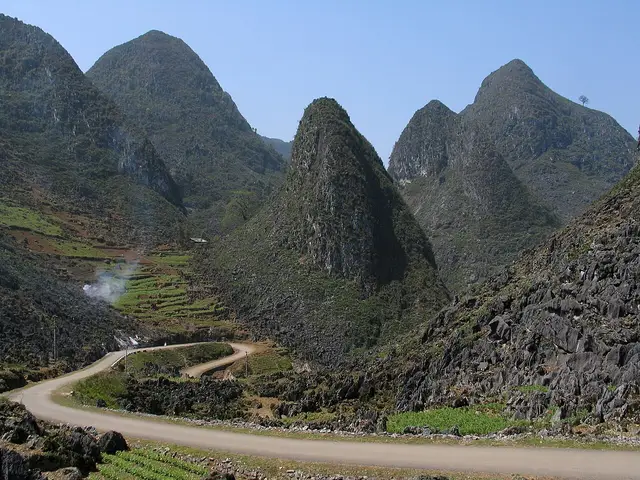
The Ha Giang Loop crosses the Dong Van Karst Plateau, a UNESCO Global Geopark. Its best-known stretch is the Ma Pi Leng Pass above the canyon of the Nho Que River.
In October the slopes bloom with buckwheat, and at weekends the villages hold markets where people gather in traditional dress. The loop usually takes three to four days.
Getting there
From Hanoi, about 6–7 hours by bus to Ha Giang; from there, a motorbike with a driver, a car or a tour.
Why it’s hard
Hairpin bends, fog and landslides in the rainy season. You may ride a motorbike only with an international driving permit of the 1968 convention; it is safer with a local driver. Villages near the border may require police permission.
Photo: Andre Hospers · CC BY 4.0, Wikimedia Commons
Quang Tri, Vietnam
Phong Nha-Ke Bang
Access 2/5 · fairly easyJFMAMJJASOND
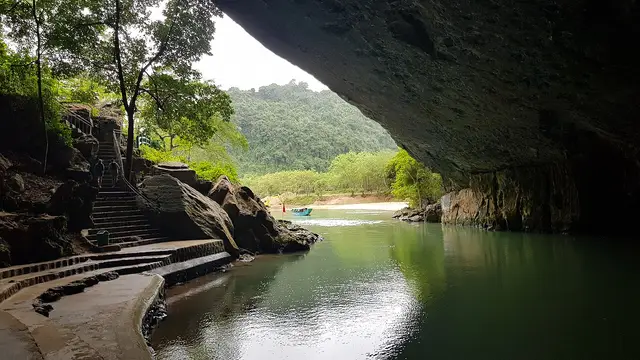
Phong Nha-Ke Bang National Park is one of the largest karst areas in Asia and a UNESCO World Heritage Site. In Phong Nha Cave you travel by boat along an underground river, and Paradise Cave runs for kilometres, with huge stalactites.
For those who are fit, there are one-day and multi-day trips to Tu Lan, Hang En and other caves, with swims in underground lakes.
Getting there
Fly to Dong Hoi, then about an hour by car to the village of Phong Nha.
Fees and tickets
Phong Nha Cave: 150,000 dong plus 700,000 for a boat for a group of up to 12; Paradise Cave: 270,000 dong.
Photo: Trantuanviet · CC BY-SA 4.0, Wikimedia Commons
Phong Nha-Ke Bang, Vietnam
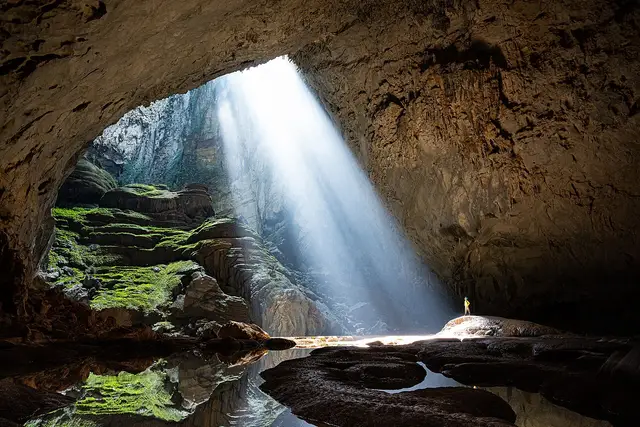
Son Doong Cave
Access 5/5 · expeditionJFMAMJJASOND
The main chamber of Son Doong is so vast that a block of skyscrapers would fit inside; light falls in through collapses in the roof, and a jungle grows there.
The expedition takes six days: about 28 km of jungle, dozens of river crossings, a 90-metre descent to the entrance and two nights at a camp inside the cave. It is run by a single licensed operator, and the number of places each year is limited.
Getting there
Fly to Dong Hoi, then go to the operator in Phong Nha; the expedition begins with a trek through the jungle.
Fees and tickets
The 6-day, 5-night expedition costs 80 million dong (about $3,000) per person, fees and insurance included; groups of up to 10, ages 18–70. There are no places left for 2027–2028.
Why it’s hard
A multi-day expedition with ropes and river crossings, selection by physical fitness, a limited number of places a year and the price of a major journey.
Vietnam: entry, safety, money, flights, laws and budget — with sources.
Entry
Russian citizens: visa-free for up to 45 days (Vietnamese government resolution 44/NQ-CP, valid until 14.03.2028). For longer stays, an e-visa for up to 90 days at evisa.gov.vn: $25 single entry, $50 multiple entry.
On Phu Quoc, foreigners with any passport can stay up to 30 days without a visa. Your passport needs at least 6 months of validity and 2 blank pages; on entry, check the stamp: it should show a departure date 45 days ahead.
Checked 2 November 2026. These are the rules for a Russian citizen with an international passport on a tourist trip. For other passports and purposes, see the official website — the button above.
The Mir card is accepted only by VRB bank, which has few ATMs and terminals. Bring dollars in cash; dong are easy to withdraw and exchange at banks. Declare cash over $5,000.
Direct Aeroflot flights to Nha Trang, Phu Quoc and Ho Chi Minh City, Vietnam Airlines to Hanoi, and charters; there are also flights to Phu Quoc and Nha Trang from Irkutsk.
Drugs: long sentences, and up to the death penalty for trafficking; a positive test alone is grounds for a case.
Vapes and heated tobacco devices are banned: since 31.12.2025, using one means a fine of 3–5 million dong.
Motorbikes: a helmet is mandatory, and you need an international driving permit of the 1968 convention along with your national licence; any alcohol at the wheel is an offence. Do not leave your passport as a deposit when renting.
Change money only at official exchange points; carry a copy of your passport.
In temples, cover shoulders and knees; do not film near military sites, and go to the border only with police permission.
prices 1.2 times lower than in Russia · price level 0.30 (US = 1), 2024
Prices are a fifth lower than in Russia. Mandatory costs are the Ha Long Bay and Phong Nha cave fees and a ticket to the old town of Hoi An.
The price level is the ratio of purchasing power parity for household consumption to the market exchange rate (World Bank). These are national averages: resorts and capitals cost more, the countryside less. Flights are not included.